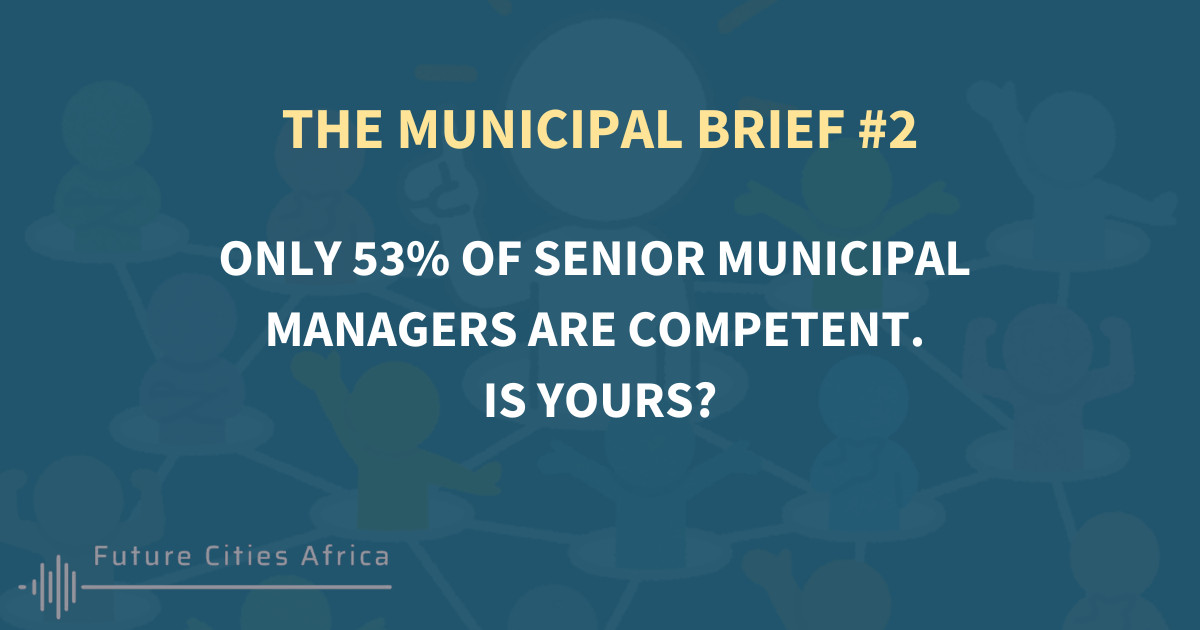
Only 53% of senior municipal managers are competent. Is yours?
Only 53% of senior municipal managers meet minimum competency levels. 63.8% of CFOs were non-compliant when the MFMA's transition window closed. And with elections confirmed for 4 November, the next council inherits whatever institutional capacity exists today.
Issue #2 unpacks professionalisation - the precondition for everything else we want local government to do well.
Key Takeaways
- Only 53% of senior municipal managers meet minimum competency levels - a figure that has not materially improved in years - while 63.8% of CFOs were non-compliant when the MFMA's competency transition window closed in 2018.
- Employee costs exceed 40% of budgets in many municipalities, leaving almost nothing for service delivery - and training spend is delivering little real improvement because it happens without competency assessments, so no one knows what gap is actually being closed.
- The legislative architecture is in place and gaining teeth - the Municipal Systems Amendment Act, MFMA minimum competency regulations and Municipal Staff Regulations (Regulation 890) are all being actively enforced. The implementation gap is not the law, it is the institutional will to apply it.
- Local government elections are confirmed for 4 November 2026, with coalition councils expected to proliferate. Professional administrations are the only stable anchor through political transition - making the next six months the most critical window in the current council term.
- Rwanda's Imihigo performance contract system offers a targeted lesson: South Africa already has the instruments - performance agreements under the MFMA, Systems Act and MSR all exist. What is missing is wiring those instruments into pay, promotion and genuine consequence management.

Ignite Advisory Services
"Professionalisation is no longer optional - it is a matter of institutional survival. The next five years are the critical window. Leadership from the top is essential, because competency assessment only delivers results when the institution is committed to acting on what it finds."
- Attie Butler, CEO, Ignite Advisory Services · Featured panellist, this issue's webinar
Ignite Advisory Services developed the Municipal Professionalisation Model (MPM) - a structured framework covering institutional, organisational, and individual dimensions of professionalisation, including competency frameworks per job function, accredited recruitment tools, performance and consequence management, CPD tracking, and succession planning. Ignite was the first consulting firm to consult on the implementation of the Municipal Staff Regulations (2021) and currently works with 42 municipalities country-wide, including 14 of the top 20 municipalities on Good Governance Africa's GGA index. 12 of the 18 municipalities in their portfolio that received clean audits are Ignite clients. Ignite also advocates for a national municipal accreditation board - giving local government professionals the same credential pathway that exists in medicine, engineering, and accounting.
Professionalisation is dealt with in the existing frameworks from an ethical and service standards perspective, but the key to this is the actual implementation and the appointment and development of professional staff. This means that we need to implement a local government employee accreditation model. Attie explained the model supported by Ignite during our recent webinar. The pro-active monitoring and evaluation of leadership and operational efficiency, and live data analytics to support decision making, will support the professionalisation of local government.
Professionalisation is the precondition. Without it, the funding doesn't move and the next council inherits the same broken system.
Only 53% of South Africa's senior municipal managers meet minimum competency levels - and the Auditor-General has consistently flagged that this number has not materially shifted in years. Among CFOs specifically, 63.8% of those in post when the MFMA's 8-year competency transition window closed in 2018 were still non-compliant. In many municipalities, employee costs already exceed 40% of the budget, leaving almost nothing for actual service delivery. And yet training spend continues to deliver little real capability improvement, because it happens without competency assessments - so no one knows what gap is actually being closed. Then on 22 April 2026, CoGTA Minister Hlabisa cut the upper limit for municipal manager remuneration by roughly 14% - from R4.25 million to R3.66 million per annum. Professionalisation is not just a governance aspiration. According to Attie Butler, CEO of Ignite Advisory Services, it is now a matter of institutional survival.
The good news is that the legislative architecture is in place and gaining teeth. The Municipal Systems Amendment Act, the MFMA minimum competency regulations, and the Municipal Staff Regulations (MSR) - including Regulation 890 on staffing, which has been actively enforced since 2021 - all point in the same direction. SALGA and COGTA have developed professionalisation frameworks. What has been missing is structured, organisation-wide implementation: standardised competency-based recruitment, institutionalised performance and consequence management, ethical tracking, and professional accreditation comparable to what doctors, engineers, and chartered accountants take for granted. Municipalities that have implemented mandatory competency assessments are already seeing results - reduced staff turnover, fewer disciplinary cases, and improved audit outcomes. The model exists. The question is whether institutions have the will to apply it.
From the Continent
Rwanda · Professionalisation and Performance
How Rwanda wired performance contracts into pay, promotion, and consequence - and what SA municipalities can take from it
Rwanda's Imihigo system, formally adopted in 2006, is a public-service performance contract drawn from a traditional accountability mechanism. Local governments and line ministries sign annual contracts with SMART indicators - 40% weighted on government-set performance pillars, 60% on local outcomes including citizen satisfaction. Performance is linked directly to rewards and career advancement. The World Bank credits Imihigo with underpinning Rwanda's steep reductions in poverty between 2006 and 2016. Crucially, earlier civil service reforms cut central ministry headcount by roughly 90% while tripling salaries for those who remained - a painful but measurable bet on quality over quantity.
The transferable lesson for SA is not that Rwanda's model should be copied wholesale - it also depleted institutional memory in some ministries. The lesson is more targeted: South Africa already has the instruments. Performance agreements under the MFMA, Municipal Systems Act, and MSR already exist. What has been missing is wiring those instruments into pay, promotion, and genuine consequence. That is the implementation gap. (Source: African Development Bank; Rwanda Ministry of Finance; allAfrica, March 2026)
The Market View
Enforcement is intensifying - and that creates a structured market for competency-aligned services.
Regulation 890 of the Municipal Staff Regulations is being actively enforced, and municipalities that cannot demonstrate minimum competency compliance face increasing scrutiny from COGTA and the AG. That enforcement posture - combined with the conditional grant requirements of the R54 billion metro programme - creates direct, measurable demand for accredited competency assessments, workforce planning tools, and structured capacity development programmes. The five accelerators Ignite's Municipal Professionalisation Model identifies - institutionalised ethics, competency-based recruitment, accreditation of municipal staff, CPD monitoring, and mentorship and succession monitored by a national accreditation authority - each represent a discrete procurement and programme-delivery opportunity. For companies servicing the municipal skills and training space, the 6 months before the November 2026 elections are the most active window in the current council term.
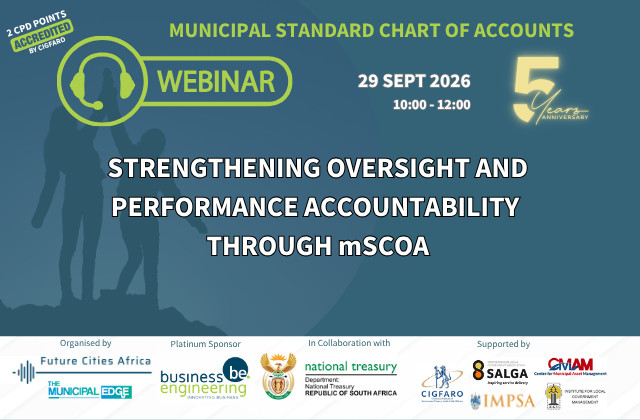
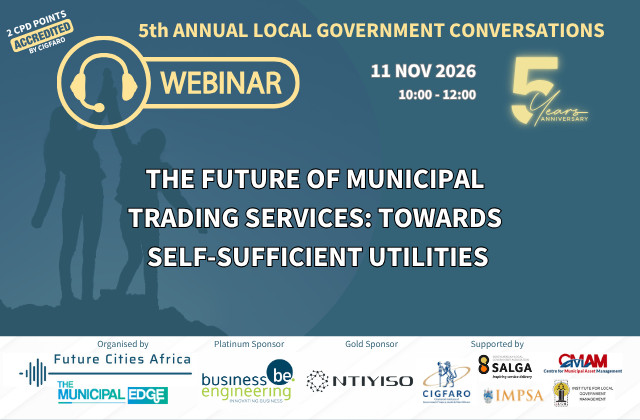
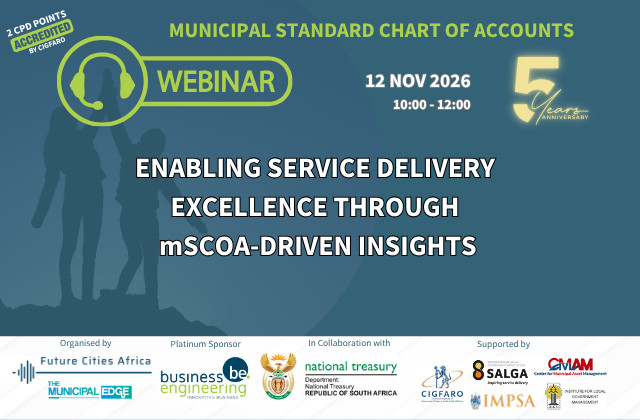
Upcoming Webinars
Recommended Podcasts

